
Amari, Explained: Sicily's Favorite Way to Linger
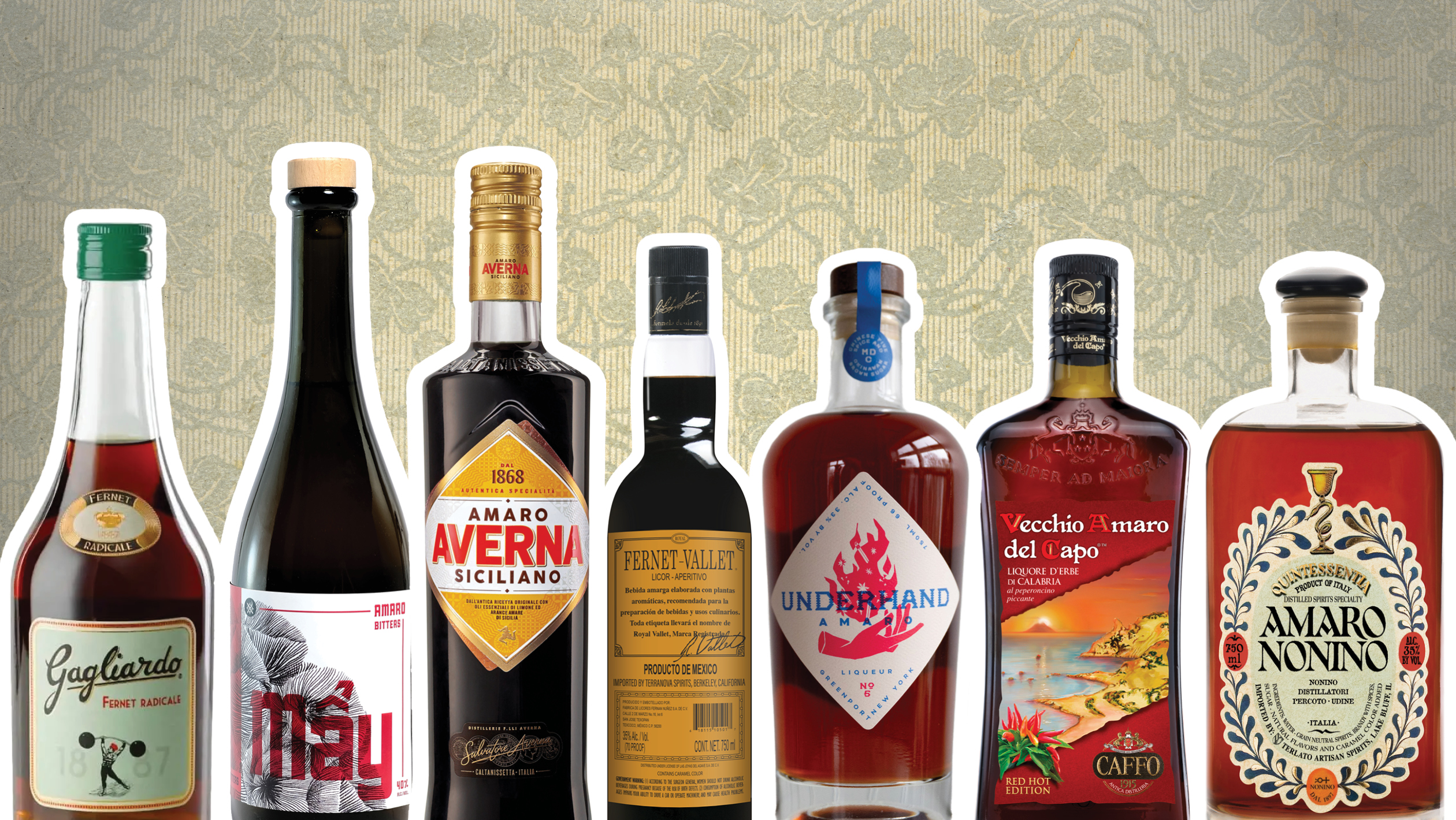
An amaro is an Italian herbal liqueur, bitter on purpose, poured in a small glass at the end of a meal. Amaro means bitter. Amari is the plural, which tells you something about how Italians felt about the idea: they did not stop at one.
We keep eight on our shelf. Six of them come from Sicily. That is unusual for an American restaurant, and it is the whole story of this post.
So what is actually in the bottle?
Herbs, roots, bark, flowers, and citrus peel, steeped in alcohol, sweetened, and often rested in barrels before bottling. That is the whole formula, and it is barely a formula at all. There is no rulebook for amaro the way there is for Barolo or Champagne. Each producer built a recipe, wrote it down, and then guarded it. Some families have kept the same one for more than 150 years.
The result is a category with enormous range. One amaro can taste like candied orange peel and vanilla. Another tastes like a pine forest after rain. They are all called the same thing, and they are nothing alike, which is the fun of it.
Amaro started as medicine
Long before anyone thought of it as a drink, this was pharmacy. Monks in Italian abbeys grew medicinal gardens and turned what they harvested into herbal elixirs. Apothecaries did the same thing in town, mixing bitter tinctures for whatever ailed you. In the 1800s those recipes walked out of the monastery and into the family business, and a category was born.
That medical origin is why amaro is served after the meal. The old belief is that bitter compounds help you digest. Whether the science fully holds up is a debate with no referee, and we are happy to let it stay that way. What amaro definitely does is slow the table down. It arrives when the plates are gone and nobody is quite ready to leave, and it gives everyone a reason to stay another twenty minutes.
Aperitivo or digestivo? The one distinction worth knowing
Both are bitter. The difference is timing and weight. An aperitivo comes before the meal, lighter and lower in alcohol, meant to wake up your appetite. That is your Aperol spritz, your Campari and soda. A digestivo comes after, richer and deeper, meant to close the evening rather than open it. Amaro, grappa, and Marsala all live on that side of the night.
Sicily's own amari
Here is the part most people never hear. Amaro is usually described as an Italian thing, but Sicily has been quietly making some of the best ones for over a century, and the island's citrus is the reason. Blood oranges, lemons, mandarins, and bitter orange peel grow within sight of the volcano, and they give Sicilian amari a brightness the northern bottles do not have.
Averna. The famous one, and it is Sicilian to the core. In 1859 the prior of the Abbey of Santo Spirito in Caltanissetta gave Salvatore Averna the monks' herbal recipe as a thank you for his generosity. Salvatore started making it for guests in his home in 1868, and the company says the recipe has not changed since. It is soft, round, and gently bitter, with bitter orange and lemon oils underneath. If you have never had an amaro, start here.
Amaro dell'Etna. Made in Sicily since 1901, built on more than two dozen herbs and aromatic plants along with citrus peel, rhubarb, and licorice. It is named for the mountain, and it drinks like it: bright citrus up front, a firm bitter finish. This is the one to order if you already love Campari.
Amara. Built on Sicilian blood oranges grown in volcanic soil on Etna's slopes. It is vivid, juicy, and only lightly bitter, which makes it the bottle we hand to people who are certain they do not like amaro. They are usually wrong, and this is how we prove it.
Citrange Limone and Citrange Mandarino. Two bottles from one Sicilian producer, one built on lemon and one on mandarin. These lead with fruit and finish with a soft bitterness, and they are lovely alongside something sweet.
Amaro Unico. Another Sicilian bottle, and the one our team reaches for when a guest says surprise me.
The two that are not Sicilian, and why we keep them
Nonino comes from Friuli, up in the northeast, and it is unusual: instead of a neutral spirit, the Nonino family builds theirs on grappa and rests it in barrels. The result is silky and warm, with dried apricot and honey. Montenegro comes from Bologna, first made in 1885 by Stanislao Cobianchi, who called it Elisir Lungavita before renaming it for Princess Elena of Montenegro. Forty botanicals, orange peel and vanilla, and a smooth finish that wins over almost everyone.
We are a Sicilian house, but a good shelf is not a border. These two earned their place.
How to drink it
Neat, in a small glass, at room temperature or lightly chilled. Some people like one big ice cube, and that is fine too. Sip it slowly, the way you would a good whiskey. An espresso alongside is very Italian and very good. It also pairs beautifully with dessert, or it can be dessert.
There is no wrong way. If you enjoyed it, you did it right.
Where to start, based on what you already drink
If you are sure you do not like bitter: Amara. If you love a Negroni or Campari: Amaro dell'Etna. If you drink whiskey neat: Nonino. If you want something soft and a little sweet: Averna. If you want bright citrus: Citrange Limone. If you want the easy crowd-pleaser: Montenegro.
Or say none of that and tell your server what you like. Half the joy of amaro is being handed something you would never have picked yourself.
A quiet gesture of care
Our beverage list puts it better than we could: in Sicily, amaro is more than a digestif. It is part of daily life, shared at the end of a meal as a quiet gesture of care.
That is really what the little glass is for. Dinner is finished, the conversation is still going, and somebody pours one more small thing to keep everyone in their seats. Come let us pour you one.
Quick answers
What is amaro? An Italian herbal liqueur, bitter by design, made by steeping herbs, roots, bark, and citrus peel in alcohol and sweetening the result. It is traditionally served after a meal as a digestivo.
What is the difference between an aperitivo and a digestivo? An aperitivo is lighter and comes before the meal to open the appetite. A digestivo is richer and comes after. Amaro belongs to the second group.
What is a good amaro for beginners? Averna or Amara. Both are soft and citrus-forward rather than sharply bitter, which makes them an easy first pour.
Is amaro Sicilian or Italian? Both. Amari are made all over Italy, and Sicily is one of the great sources, with Averna from Caltanissetta and several bottles built on the island's citrus. Six of the eight on our list at 'mina are Sicilian.
Where can I try Sicilian amaro in Salt Lake City? At 'mina. We pour eight, most of them from Sicily, and our team is happy to guide you to the right one.
Your seat at the table awaits.