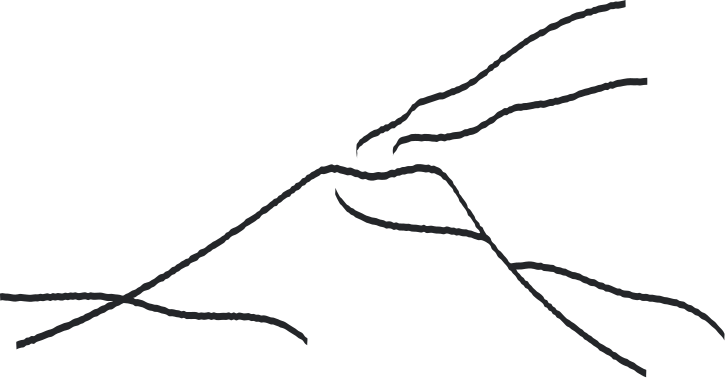
A Beginner's Guide to Sicilian Wine (Start with the Volcano)
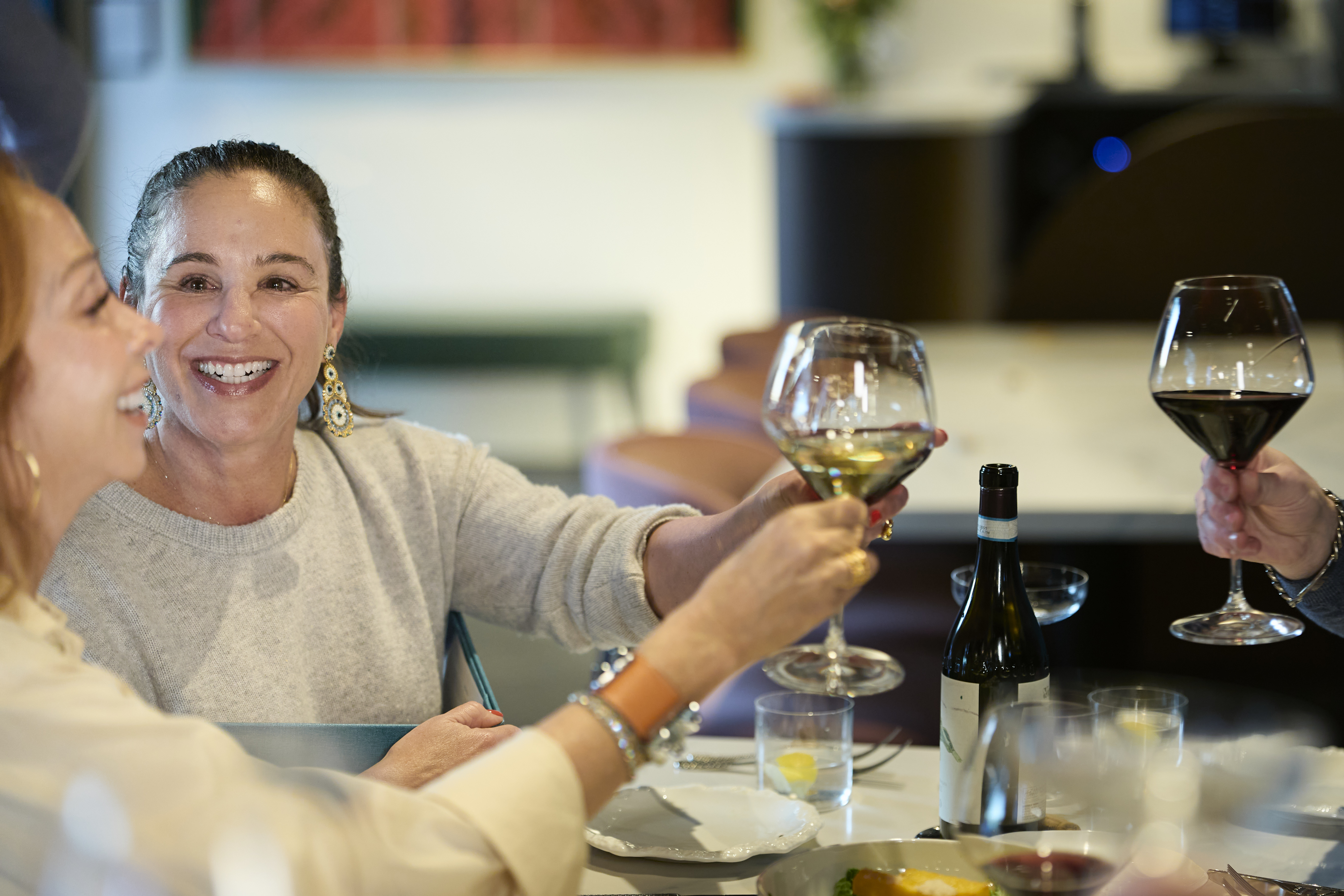
Start with the volcano. That's the whole secret. If you remember one thing from this guide, order a glass of Etna Rosso the next time you see one, and you'll understand why wine people can't stop talking about Sicily.
Here's how confident we are in that advice: the best-selling red at 'mina right now isn't a Barolo or a Brunello. It's the Calcaneus Etna Rosso, made by a small family winery on the northern slope of an active volcano. Nobody planned that. Our guests did it on their own. If you want to see what that looks like in practice, our wine list is the largest Sicilian selection in the United States, nearly 100 labels organized by where on Mount Etna they come from.
Why Sicilian wine, and why now
Sicily has been making wine for about three thousand years, since the Phoenicians and Greeks planted the island's first vines. For most of the last century, though, Sicily was treated like Italy's wine warehouse: enormous harvests shipped north in bulk to beef up other regions' bottles. The grapes were remarkable. The ambition wasn't.
That changed in the last few decades. A generation of Sicilian winemakers decided to stop selling in bulk and start bottling the island's own story, from its own grapes, in its own extraordinary places. Today Sicily is one of the most exciting wine regions on earth, sommeliers plan vacations around it, and the prices haven't caught up to the quality yet. For you, that means the best value on any Italian wine list is usually hiding in the Sicilian section.
The volcano makes the wine
Mount Etna is Europe's most active volcano, and its slopes are covered in vineyards. That sounds like a questionable real estate decision until you taste the results. Volcanic soil is young, black, and full of minerals. The vineyards sit high, some above 3,000 feet, so grapes ripen slowly and keep their freshness. And many of the vines are old, tended by hand the way they have been for generations. One bottle in our cellar, from Tenute Bosco, comes from vines that survived the phylloxera plague of the 1800s. You are drinking history that predates your great-great-grandparents.
What does volcanic taste like? Tension. Etna reds are light in color but serious in presence, with bright red fruit, a smoky mineral edge, and fine tannins. Wine writers compare them to Burgundy and Barolo, not for power, but for precision. Etna whites are their own revelation: salty, citrusy, and electric, like the mountain and the sea agreed to share custody.
The grapes worth knowing (four names, that's it)
Nerello Mascalese. Etna's great red grape, and the one to remember. If you love Pinot Noir, this is your bridge into Sicily. If you love Barolo, same door. It's the grape behind our best-selling Calcaneus and nearly every Etna Rosso in our cellar.
Carricante. Etna's white. Grown high on the mountain, it makes wines with racy acidity, lemon and green apple, and a saline finish that tastes like sea air. Around the village of Milo it earns the title Etna Bianco Superiore, and it ages as gracefully as fine white Burgundy.
Nero d'Avola. Sicily's most famous red, from the island's warm heart. Dark fruit, soft edges, generosity to spare. If your table usually orders Cabernet, start here.
Grillo, and its sunny cousins. Sicily's everyday whites: Grillo, Catarratto, Zibibbo, Malvasia. Bright, aromatic, and built for the first glass of the evening. Zibibbo smells like orange blossoms and tastes bone dry, a favorite trick to play on your dinner guests.
Why our wine list looks like a map
Open our wine list and you'll find something unusual: the Etna pages are organized by slope, with a drawing of the volcano marking where you are. That's not decoration. The north slope makes the mountain's most precise, structured wines. The south-east gets the most sun and makes the warmest, most generous ones. The south-west sits highest, where altitude keeps everything fresh and composed. Same volcano, same grapes, three personalities.
It's the simplest wine lesson we know: place matters, and on Etna the differences are dramatic enough to taste side by side over one dinner. Worth knowing too: most vineyards on Etna are organic by nature, and the bottles we mark on our list go further still, into natural, low-intervention winemaking. As our list says, il vino e la poesia della terra. Wine is the poetry of the earth.
Where to start at 'mina
By the glass, always. We pour Etna in every color: Gulfi's Etna Rosso, Murgo's Etna Rosato, Benanti's Etna Bianco, and Murgo's brut, a sparkling Nerello Mascalese made the same way as Champagne, on a volcano. A few of the serious bottles, like Benanti's Pietramarina Etna Bianco Superiore and the Fessina Prephylloxera Etna Rosso Riserva, are poured through a Coravin system, which lets us serve rare wine one glass at a time without opening the bottle.
From there, follow what you already love. Pinot Noir drinkers, ask for the Calcaneus. Chardonnay drinkers, try an Etna Bianco. Big-red drinkers, Feudo Montoni's Nero d'Avola will make you feel at home. Celebrating something? Sicilian bubbles, and yes, you can add strawberry or lemon granita to make it properly Sicilian. And if you're curious at dessert, ask about passito from the island of Pantelleria, a sweet wine made from sun-dried grapes that tastes like apricots and honey.
The real beginner's move: ask Giro
Here's the part no guide can replace. Giro, our co-owner and host, grew up in Taormina with Etna smoking on the horizon, and he's a level-three sommelier who chose every bottle in our cellar himself. Our wine list says it right up front: if something catches your eye, ask us why we love it. We are happy to share the story. That's not a courtesy line. It's Giro's favorite part of the night.
So don't memorize grapes. Come thirsty and curious, tell him what you usually drink, and let him pour you the island.
Quick answers
What is Sicilian wine like? Fresher and more elegant than most people expect. Sicily's best-known wines today come from high-altitude volcanic vineyards on Mount Etna, with bright acidity and mineral depth, closer to Burgundy in spirit than to a heavy southern red.
What is Etna Rosso? A red wine from the slopes of Mount Etna in Sicily, made mostly from Nerello Mascalese. Light in color, precise, and food-loving. It's the best-selling red at 'mina.
What Sicilian wine should a beginner try first? A glass of Etna Rosso if you drink reds, an Etna Bianco or Grillo if you drink whites, or a sparkling Nerello Mascalese if you're celebrating.
Where can I drink Sicilian wine in Salt Lake City? At 'mina, our cellar is organized around Mount Etna, slope by slope, with Sicilian wines by the glass and rare bottles poured by Coravin. Ask for Giro.
Your seat at the table awaits.